UI / UX Design
Improving Mobile Furniture Discovery
Improving Mobile Furniture Discovery
Redesigned product browsing to reduce decision friction and support faster furniture selection within an existing e-commerce system.
Redesigned product browsing to reduce decision friction and support faster furniture selection within an existing e-commerce system.
Problem :
Problem :
Users struggled to quickly find the right furniture within a dense mobile catalog.
Browsing required:
Scrolling through large grids
Opening multiple product pages
Navigating technical filter dropdowns
Manually comparing items
The goal was to reduce decision friction and improve mobile product discovery.
Constraints :
Constraints :
The project operated within real system limitations:
The existing grid structure could not be rebuilt
Filtering logic was backend-driven
Product data structure was predefined
No formal user testing resources were available
Instead of rebuilding the system, I focused on improving clarity and navigation within existing constraints.
Approach :
Approach :
I analyzed leading mobile furniture platforms (Wayfair, IKEA, Article) and mapped typical browsing behavior:
Users scan visually before reading
Users compare multiple items
Users decide based on space context and simplicity
From this, I redesigned the browsing experience to:
Provide meaningful starting points
Reduce cognitive load
Surface decision-relevant information earlier
Solution :
Solution :
The updated mobile experience included:
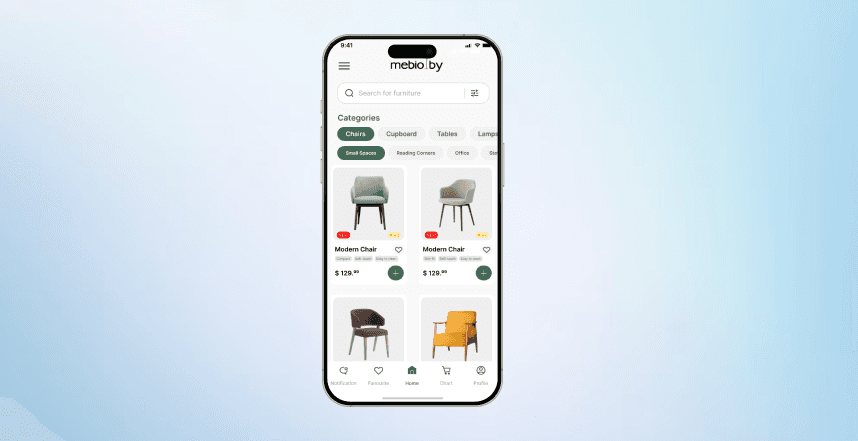
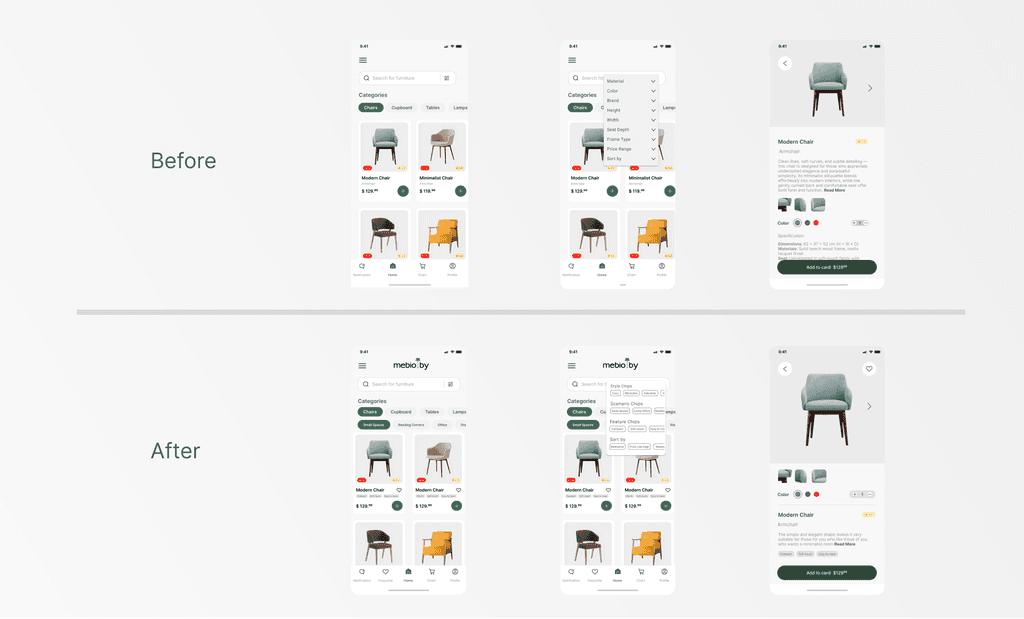
Scenario-based entry blocks (e.g. “Small Spaces,” “Home Office”)
Tappable filter chips replacing technical dropdowns
Smart tags and quick-save functionality
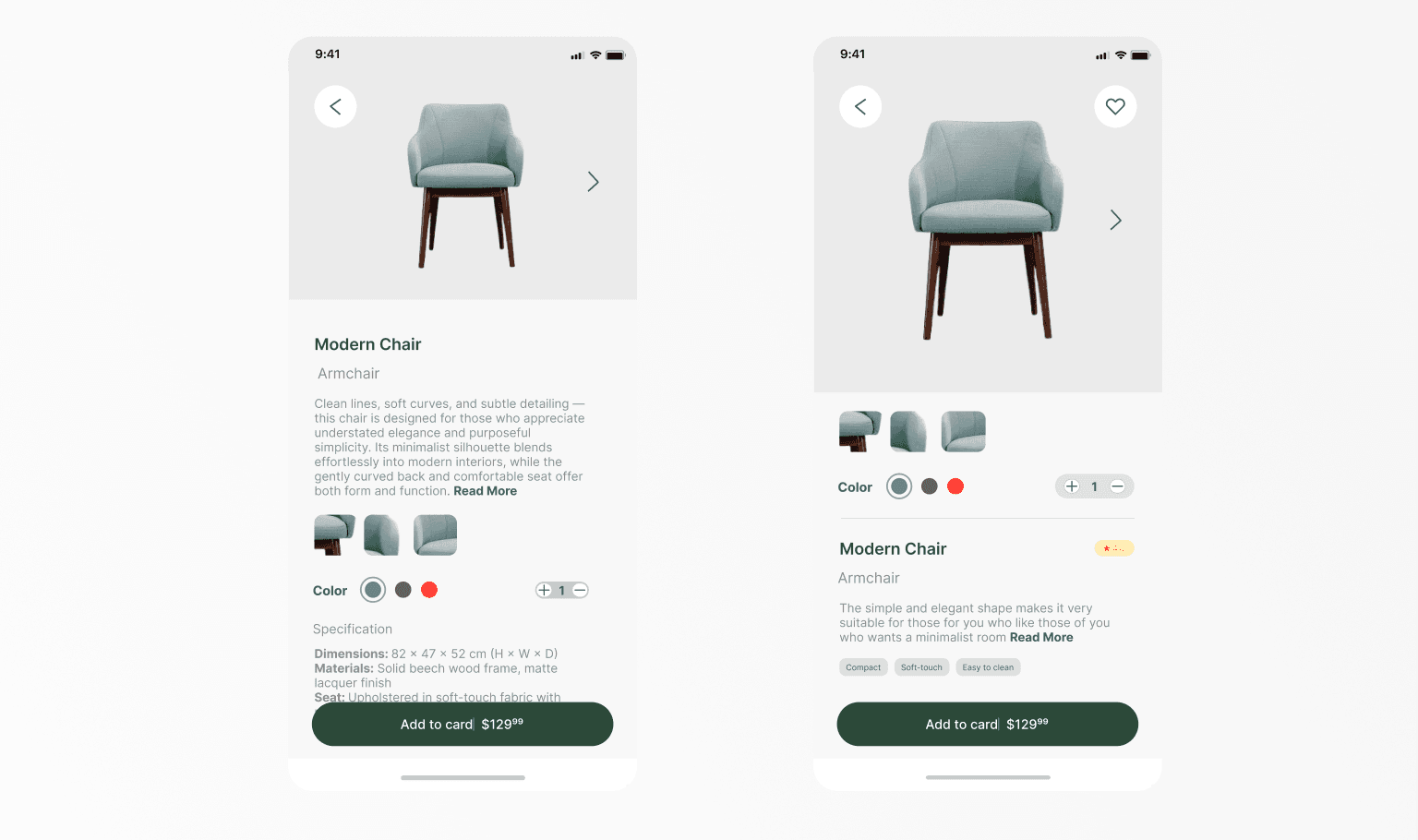
Cleaner product pages with progressive information
Internal stakeholder feedback confirmed improved clarity and reduced browsing friction.
UI / UX Design
Improving Mobile Furniture Discovery
Improving Mobile Furniture Discovery
Redesigned product browsing to reduce decision friction and support faster furniture selection within an existing e-commerce system.
Redesigned product browsing to reduce decision friction and support faster furniture selection within an existing e-commerce system.
Problem :
Problem :
Users struggled to quickly find the right furniture within a dense mobile catalog.
Browsing required:
Scrolling through large grids
Opening multiple product pages
Navigating technical filter dropdowns
Manually comparing items
The goal was to reduce decision friction and improve mobile product discovery.
Constraints :
Constraints :
The project operated within real system limitations:
The existing grid structure could not be rebuilt
Filtering logic was backend-driven
Product data structure was predefined
No formal user testing resources were available
Instead of rebuilding the system, I focused on improving clarity and navigation within existing constraints.
Approach :
Approach :
I analyzed leading mobile furniture platforms (Wayfair, IKEA, Article) and mapped typical browsing behavior:
Users scan visually before reading
Users compare multiple items
Users decide based on space context and simplicity
From this, I redesigned the browsing experience to:
Provide meaningful starting points
Reduce cognitive load
Surface decision-relevant information earlier
Solution :
Solution :
The updated mobile experience included:
Scenario-based entry blocks (e.g. “Small Spaces,” “Home Office”)
Tappable filter chips replacing technical dropdowns
Smart tags and quick-save functionality
Cleaner product pages with progressive information
Internal stakeholder feedback confirmed improved clarity and reduced browsing friction.
UI / UX Design
Improving Mobile Furniture Discovery
Improving Mobile Furniture Discovery
Redesigned product browsing to reduce decision friction and support faster furniture selection within an existing e-commerce system.
Redesigned product browsing to reduce decision friction and support faster furniture selection within an existing e-commerce system.
Problem :
Problem :
Users struggled to quickly find the right furniture within a dense mobile catalog.
Browsing required:
Scrolling through large grids
Opening multiple product pages
Navigating technical filter dropdowns
Manually comparing items
The goal was to reduce decision friction and improve mobile product discovery.
Constraints :
Constraints :
The project operated within real system limitations:
The existing grid structure could not be rebuilt
Filtering logic was backend-driven
Product data structure was predefined
No formal user testing resources were available
Instead of rebuilding the system, I focused on improving clarity and navigation within existing constraints.
Approach :
Approach :
I analyzed leading mobile furniture platforms (Wayfair, IKEA, Article) and mapped typical browsing behavior:
Users scan visually before reading
Users compare multiple items
Users decide based on space context and simplicity
From this, I redesigned the browsing experience to:
Provide meaningful starting points
Reduce cognitive load
Surface decision-relevant information earlier
Solution :
Solution :
The updated mobile experience included:
Scenario-based entry blocks (e.g. “Small Spaces,” “Home Office”)
Tappable filter chips replacing technical dropdowns
Smart tags and quick-save functionality
Cleaner product pages with progressive information
Internal stakeholder feedback confirmed improved clarity and reduced browsing friction.